

About the only thing entertaining about the NBA playoffs is the horrid example of what’s a foul and what’s not. And we now know more about what we see in high school, and where it comes from…Euro-Step, anyone?
 On another gloomy Friday, before another cold and rainy May weekend, I was entertained this morning with the ESPN clips of Lakers coach JJ Redick complaining about last night’s playoff loss to Oklahoma City…that Redick blamed on the officials.
 Admittedly, I almost never side with anything pertaining to the National Basketball Association and it’s WWE (World Wrestling Entertainment) rules…that say you don’t have to advance the ball against full-court pressure in the last minute of the game – that you can call time out and get the ball out at halfcourt…that traveling doesn’t exist anymore, it’s just the Euro-Step.
In this case it appears that no one on the bench, on the court, or in the stands knows what they’re watching. What official Ben Taylor is saying to Redick must sound like AOC explaining how billionaires got their money.
However, if you watch the enclosed clip it does help explain what you increasingly see in the high school game…and what I’m sure you’re going to see more of in the future. Contact isn’t contact anymore, or maybe it is. Rather, it’s an interpretation of what’s good for the flow of the game at the moment. Maybe.
And as I’ve written about for years, this is brought on by officials and supervisors who care more about their own own image than your not understanding what you’re watching. Like, no charging call is every actually legitimate by interpretation, and neither is a blocking call. And you can be perfectly vertical, which supposedly exonerates the defensive player in the case of contact on a block attempt, but if you raise your hands to become more vertical it might be a foul. Truly, the next time you watch a basketball game in person, the list of what you don’t understand will be longer than what you do.

VPP Proudly sponsors your favorite basketball coverage on Press Pros Magazine.com.
I see a lot of fouls. And I see a lot of flopping, too. No different than high school. And where do you think they learn, players and officials? Why concern yourself with rules? Players are bigger, stronger, faster…we have to conform to the player instead of the player conforming to the game. The tail wags the dog.
That whole business where the official (Taylor, above) is pointing his finger at Redick is just drama…more WWE. If you’re really interested in managing the game you eject Redick immediately, remove the distraction, and set an example for everyone about how to conform. And they will.
I learned decades ago when I was working games in the Columbus City League. I was paired with a veteran official who did just that one night in a game between Linden-McKinley and Columbus West. We weren’t two minutes into the game when he gave a technical to one of the coaches, and immediately a second ‘T’ and sent him to the locker room.
“Why did you do that?” asked the coach, with the crowd roaring in his defense.
“Because you’re a distraction,” said my partner. “And I don’t want it for three more quarters.”
Things calmed down.
Of course, officiating has evolved now to the point of everything being subject to explanation (Redick, above), and the ever-constant justification from coaches now about officials they like because “you can talk with them”.
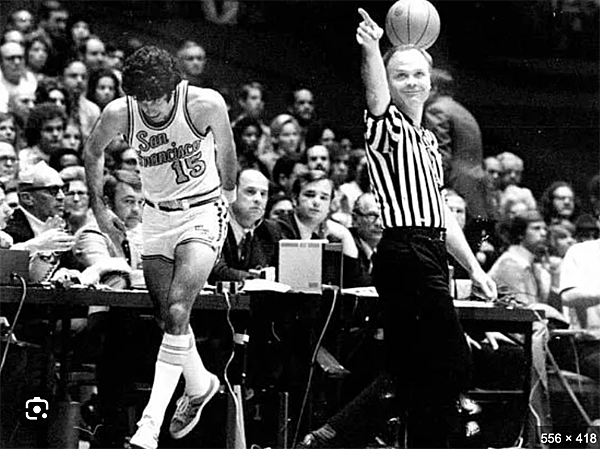
“I say hello, and that’s it,” SEC official Bob Wortman once told me about communicating. “Nothing about basketball. I didn’t need help from Joe B. Hall.”
When I was a younger writer I once did a story for Referee Magazine involving officials Bob Wortman and George Conley, who worked together for many years in the Southeastern Conference. Wortman’s son, Dave, later worked games for years in west-central Ohio and is now retired.
And Conley’s son, Larry, was a star player for Adolph Rupp at Kentucky, and later a well-known analyst for ESPN.
Wortman worked both college basketball and as an NFL official, and this is what he said in 1990 about communicating during a basketball game.
“I said hello when I come out on the court, and that was it,” he explained. “Never anything about basketball. If there was a question over a call I’d check with my partner, because he was the only other non-partisan opinion in the arena. I didn’t need help from Joe B. Hall.”

Publisher Sonny Fulks writes OHSAA and Ohio State sports for Press Pros Magazine.com.
What a change from now, and a fundamental change in our culture, where everything has to be debated. Umpire Joe West wasn’t having it. When we were both young and West a rookie in the National League, he explained once that any time a manager approached him on the field he wanted him to know he was walking on egg shells.
Which, in part, is why you see video clips like the one above. It helps create interest in a game that people don’t care about after seven long months of WWE basketball.
Interestingly, I’ve talked to a number of active and retired officials who’ve agreed to sit down for a column before another basketball season…who’ve agreed to share some things about the game and what none of us understand about contact, the double-talk, and why traveling is now a good thing because it’s a Euro-Step. It’s not traveling at all:
Because…it utilizes the ‘gather step’ rule, allowing a player to take two legal steps after gathering the ball. The first step in a Euro Step is legally considered the ‘gather’ or step zero, occurring while the dribble is being stopped, followed by two, legal, separated steps to change direction. So says YouTube!
And now it’s clear. No?

Technical Roofing proudly sponsors coverage of your favorite sports on Press Pros Magazine.com.