

After sixteen years of frustration and unreliability, we’ve finally turned to the solution for rural internet. It works, and the speed rivals any major sports facility I’ve tried to publish from previously. You might be interested to know.
 It’s far past the time when something better than average with wi-fi is needed.
We’re generations past the bull*** ads and broken promises.

VPP proudly sponsors amateur baseball on Press Pros Magazine.com.
Of being a quarter of a mile beyond where the cable company lines have stopped service out in the country.
Satellite? Sure.

Publisher Sonny Fulks writes OHSAA and Ohio State sports for Press Pros Magazine.com.
But whose satellite, and to what extent has it been tested?
Frankly, in the sixteen years of Press Pros operation getting online and staying online has been the one major obstacle to publishing the website.
Friday nights are a nightmare if the provider you use is subject to overuse and it’s underpowered – at least from my understanding of how it works.
Upload speed versus download speed. Constant testing…
Resetting routers…passwords…Foxfire…Chrome…Safari…and compatibility. Which is best?
Do you have the latest software upgrade?
Early on I had someone apply for a job with us solely to make sure that we were always online. He was a professional ‘fix’it’, he claimed. And expensive. And how do you know when he’s working? The thing with internet is no one really understands how it works, people can charge you what they want, and you won’t know the difference. You understand it only as a tool, like your car’s engine. And then you don’t understand when the car won’t start!
Some of you may have noticed over the course of the past year…the slowdowns. And back in February it reached a point during basketball season that I went to the mountain and called long-time associate, John Howenstein, a retired programmer/developer who’s contributed to this site’s operation for years.

Here’s what makes it work…satellites in space that make it as close to Pentagon speed as the average person can justify.
“First of all, you have so many graphics on there that it’s going to take something nuclear to upgrade your speed to the Pentagon standard,” Howenstein laughed.
“Second thing, you can’t afford to do it the Pentagon way, or I doubt you can,” he added. “It’s time to ditch Verizon, T-Mobile, and AT&T and go Elon Musk. It’s genius stuff. You need Starlink. It’s not fiber hard line, but that’s not an option. If you’re stuck using wi-fi, there’s nothing like it. Truth or dare…at its best it’s as good as ethernet because demand is not an issue.”
It was installed two weeks ago, and yes, it’s more expensive than the company on the corner, regardless of who that is. And the installer said, “Give it a week to reach maximum efficiency. You’re going to see a difference, and it’s only going to get better.”
And we have. Starlink’s reputation has always been great for areas where traditional cable, or fiber is not an option. More, the upload speeds we’ve experienced have yet to be less than 40 megabites per second, better than twice what we had with Verizon on its best day. And to Howenstein’s point about graphics, it frankly hasn’t helped that much with search speed for a library that has more than a million photographs in it, going back to 2015.
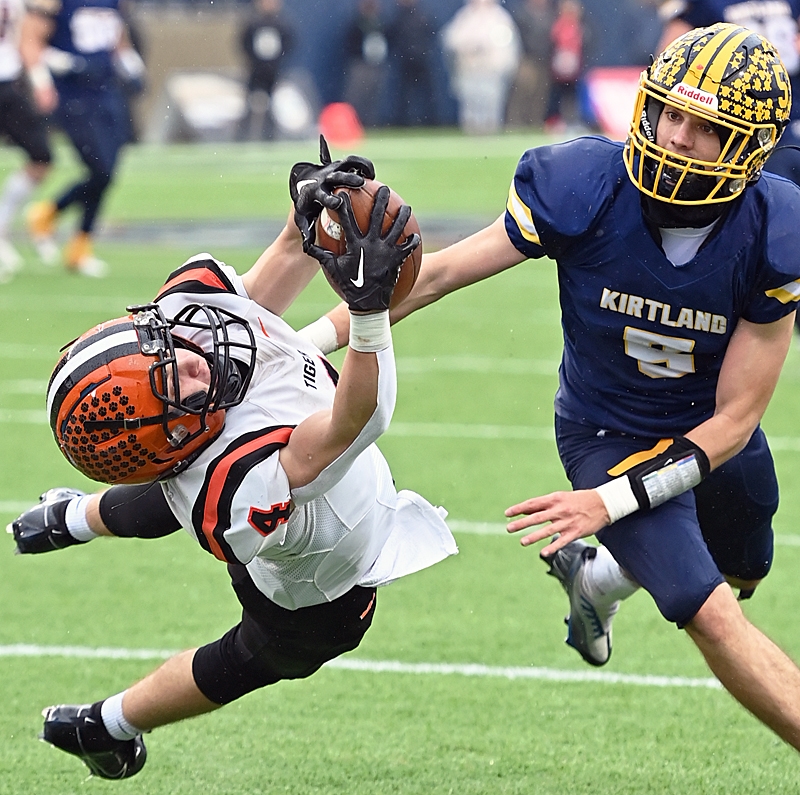
Big files and and the need for speed…requires upload speeds of up to 40 Mbps to eliminate posting inefficiency.
But once it finds what you want (no more than ten seconds) the typical post time is about half what it was previously.
To put it another way, if it takes thirty minutes to lay out and post the typical story on Friday night, Starlink efficiency has cut that time in half, at least in July. The football playoffs, come November, will be the ultimate challenge.
“It’s more expensive and it won’t be perfect,” adds Howenstein. “But there is no perfect internet. And it really is the only wi-fi ad on television that’s anywhere close to the truth.”
By the way, start to finish with publishing this page…it took five minutes. Less than half the average time it used to take.
Let’s hope John’s right. He always has been. And if he isn’t, I’ll tell you.

Technical Roofing proudly sponsors the Midwest Athletic Conference on Press Pros Magazine.com.