

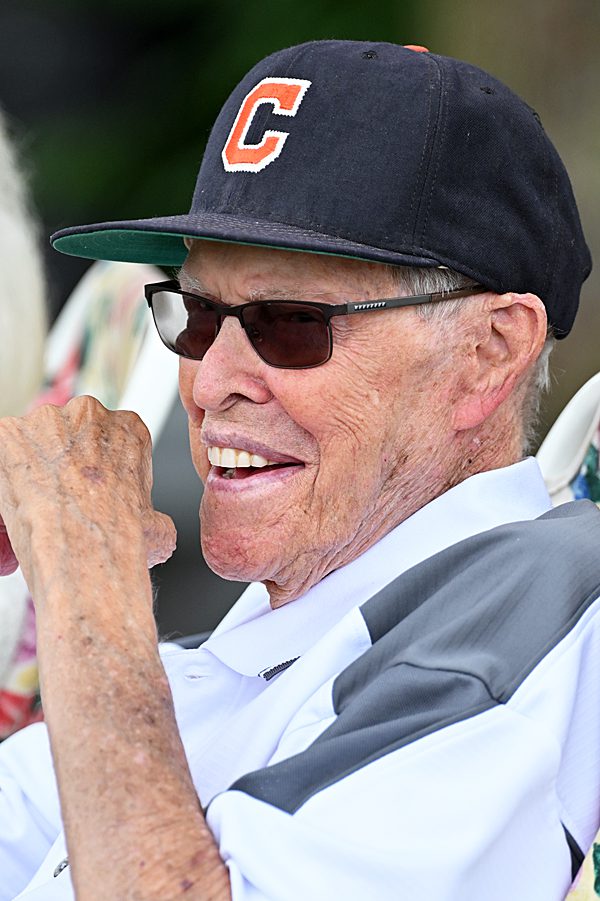
“He believed that there was nothing better for boys to do after the high school season than to play ACME baseball.” Coldwater’s Lou Brunswick (above) was a founding father of ACME baseball in 1960. (Press Pros Feature Photos)
Just weeks away from the start of high school football and other fall sports, area amateur baseball and softball continue the age-old struggle for recognition and relevancy…and largely, in anonymity.
 Among brisk response to this week’s post about fall sports seasons and high school football and volleyball, there was a single response from a reader in a neighboring County who wrote to add, “I hope you guys will not forget the ACME state baseball tournament. It would be nice to see you there because you have the ear of at least a few people that support summer baseball.”
And if you’re among the uninformed, ACME baseball was formed back in 1960 by visioneries like Henry Steiner and Lou Brunswick who saw the importance and value of having high school teammates play together after the end of the high school season as a way of mutual skills improvement, personal relationship building, and community pride and support for young people taking stock in their own competitive futures.

Minster Bank proudly sponsors the best in area sports stories on Press Pros Magazine.com.
It was founded during the height of American Legion baseball popularity, not to compete with Legion baseball, but as an alternative option for kids to play in areas where Legion baseball either didn’t exist, or in that day…the local Legion posts lacked the money to properly fund baseball in the community. Popular as it was in its heyday, there were large areas in Ohio (and other states) where there simply was no American Legion baseball.
And no one seemed to notice.

Publisher Sonny Fulks writes OHSAA and Ohio State sports for Press Pros Magazine.com.
But Coldwater coach Lou Brunswick did notice. Brunswick, a competitive and wiley throwback to his own days of growing up when community baseball was a priority second only to attending church on Sunday, believed there was advantage for his own team at Coldwater to play organized and sanctioned summer baseball.
“Dad really believed,” said Brunswick’s son and former Bellefontaine coach Mark Brunswick in a 2022 interview, “…that there was nothing better for boys to do after the school season was over than play ACME baseball. It’s all he talked about, and he convinced a lot of his contemporaries of the value in having an official, recognized ACME organization. He knew that there weren’t enough places for kids to play. He knew that war veterans were coming back in the 60s. And he knew that there would emotion among them to support youth baseball in their communities.”
And indeed, fifty years ago in area communities like Piqua, Troy, Vandalia, Covington, and even Palestine (over in Preble County) there were ACME baseball teams operating alongside, or in the absence of, that town’s Legion team.

After the game stop by for a winning ‘Big Buy’ at The Spot, in Sidney.
But Legion baseball began to show cracks in the early and mid-90s. Area posts were losing membership, and along with it funding for baseball. In addition, the proliferation of play-for-profit amateur baseball (elite and travel ball) was altering how youth baseball was organized and operated. It’s estimated that in the span of a single decade Legion baseball, across the country, declined by as much as 25%. And by 2015, up and down I-75 in west-central Ohio, it was all but gone. Only remote examples like Piqua, Troy, and Sidney managed to keep a team on the field. And in 2026, after seventy years of Post 184 baseball in Piqua under the venerable leadership of Jim Hardman, Tubby Wilson, Rick Gold, businessman Steve Staley, and others, now there is no American Legion baseball.
In Troy, only for the constant work and commitment of Frosty and Connie Brown for the past half century is there still a remnant of American Legion baseball.
And in Sidney, local organizers have worked hard in recent years to maintain the tradition for Shelby County players. But their effort has known its challenges.
 As has ACME in some areas.
But true to the vision of Lou Brunswick, the Brunswick family, and other communities in western and northwest Ohio, ACME baseball will stage it’s annual state championship tournament July 18-20, in Kalida, Ohio.
In addition, Minster, another community with a long-standing tradition of summer baseball, has it’s annual youth baseball and softball tournament next week (July 15th through the 19th) at the Minster Youth Baseball and Softball Complex, which annually attracts as many as 70 teams from as far away as someone is willing to drive. Under thriving community administration, and high school baseball coach Mike Wiss, baseball in Minster has relevance right there alongside Octoberfest.
As it does in Versailles, where the recent Craig Stammen Classic attracted nearly a half million page views on the Press Pros site during its four-day run.
So, in reality, how important is summer baseball? How important is ACME? And how important is playing baseball with your friends, as Lou Brunswick and the Brunswick family still advocate?
If you ask St. Henry high school baseball coach Mike Gast, his opinion speaks volumes, as his 2025 St. Henry team won the 2025 ACME state tournament in Kalida, and followed that up with a 2026 trip to the OHSAA State Final Four tournament in Akron.
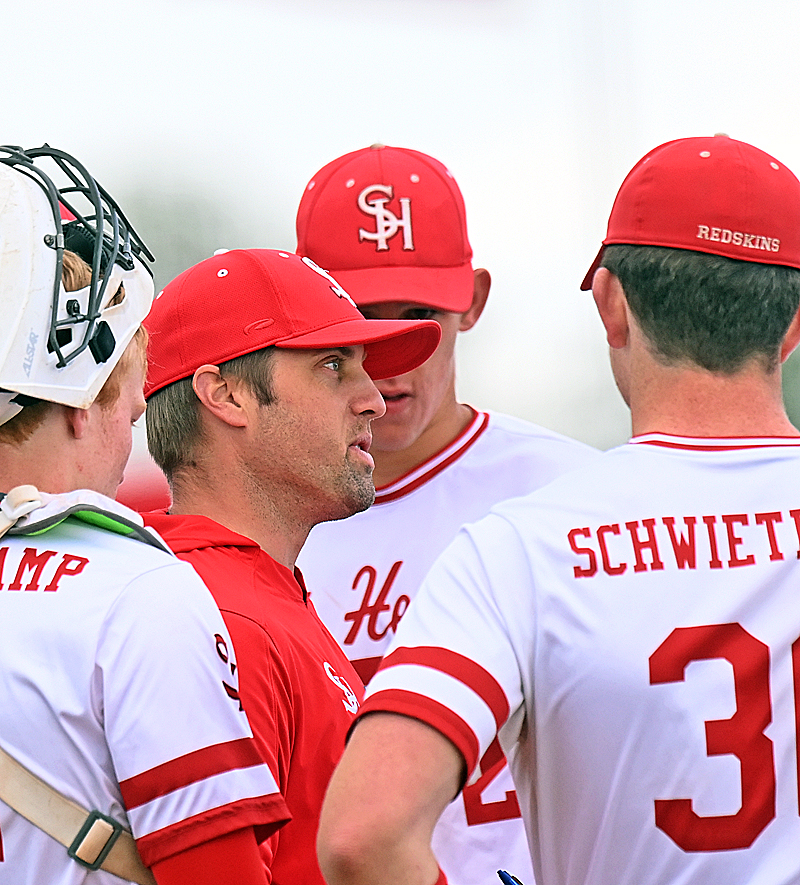
“There’s no doubt in my mind that winning the ACME tournament together last year was a tremendous boost to us and the kind of year we had during the high school season.” – St. Henry high school baseball coach, Mike Gast
“There’s no doubt in my mind that winning the ACME tournament together last year was a tremendous boost to us and the kind of year we had during the high school season,” says Gast. “Our players were together during that time (ACME), developed their skills and trust in each other, and we were really good throughout the entire spring baseball season. Some high school teams have good streaks throughout the year, and some down times here and there. But we were good throughout the entire season. I’m very proud of the year we had.”
Being together? Playing together, instead of spending the season playing travel ball for the unreliable justification that playing against supposed better (elite) competition? Does it really make you better?
“Baseball is a game of execution and repetition,” said University of Nebraska coach Will Bolt this spring. “And what concerns me about travel ball is the amount of games played as opposed to the amount of daily practice. Catching a ground ball and throwing out the runner is the same against any level of competition. Executing the breaking ball properly works, regardless of who you do it against. I learned that playing summer baseball growing up with my friends in Texas.”
San Diego Padre manager Craig Stammen has maintained for years that the time he spent in Versailles playing community baseball was the formative basis of his baseball career.
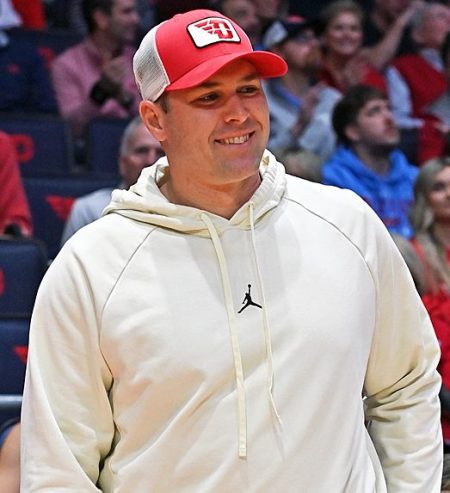
‘There’s nothing better than playing with your friends against the same kids and communities that you’re gopint to play against when you’re in high school.” – former Versailles Tiger, UD Flyer, Craig Stammen
“There’s nothing better than playing with your friends against the same kids and communities that you’re going to play against when you’re in high school,” says Stammen. “It’s more fun when you play with your friends.”
Just like Legion baseball, ACME numbers have seen their own decline in recent years – easy to deprioritize compared to other community issues with adult benefit that compete for funding.
And the harshest reality of all is the number of those who have no idea that community baseball – ACME, the Stammen Classic, and the Minster Youth Tournament – even exists.
Or this? What have those communities done to make up for the absence of something as intrinsically good…that develops skills…and teaches good character better than summer baseball?
Remembering, too, that the right tackle in football will never know the thrill of hitting an 80 mile per hour fastball with the bases loaded to drive in the winning run. He may make a block, but if he does, or doesn’t, no one knows.
Everyone knows in baseball.