


Spend the time to hunt prime habitat of public hunting grounds in the Dakotas and Montana and you’ll find birds and an enjoyable experience. (Press Pros Feature Photos)
I spent six weeks in July and August traveling the Midwest and West looking for signs of a good pheasant hatch and hunting prospects for the fall. If you’re a pheasant hunter what I found is bound to make you smile.
By Ray Reilly for Press Pros
 There’s a reason why Press Pros owner and publisher Sonny Fulks goes west in December to hunt ringneck pheasants. He finds birds.
What’s more, he’s found them for years because I suspect that he has one of the best networks of people who own land, appreciate hunting, and guard the privilege of having permission to hunt of anyone I know.
And I know this, it’s been decades since he’s seen a wild pheasant anywhere in Ohio’s 88 counties, where long ago it was decided that corporate farming and the encroachment of Ohio’s industrial culture took precedence over natural resources. I know, because I grew up in Ohio, observed for myself, and to this day shake my head over the ODNR and conservation groups pretending that the good 0l’ days can be once again, if we just spend more money. Perish that thought.
Olde English Outfitters, in Tipp City, Ohio, proudly sponsors tales of the outdoors on Press Pros Magazine.com.
I also know that Sonny goes hunting during times and weather conditions that no one else would dare challenge. Three years ago he shared that he and three others hunted in the upper plains near the Canadian border in -8 degree below zero weather. Hunting in the pothole country of the Dakotas flyway, five-acre plots of ice and cattails on private land harbored rooster pheasants by the hundreds, the kind of shooting that only a choice few ever experience. I’ve seen the photos, but he’s never offered to share the trip. Because he knows…to me there’s no ringneck anywhere that’s worth walking in -8 degrees and twenty mile per hour winds. But it suits him, apparently.
Hence, I take it upon myself to share a column idea on which we both readily agree. Where can the average hunter go to find birds that 1) don’t cost the fortune of hunting at an Orvis lodge, 2) a place that’s off limits because it’s privately owned, 3) reliable public land big enough to absorb the constant pressure of the early season when everyone wants to go for the easy, dumb roosters. Lest you shake your head and believe it impossible, it’s not at all. It just requires planning and a two-week period of travel time.
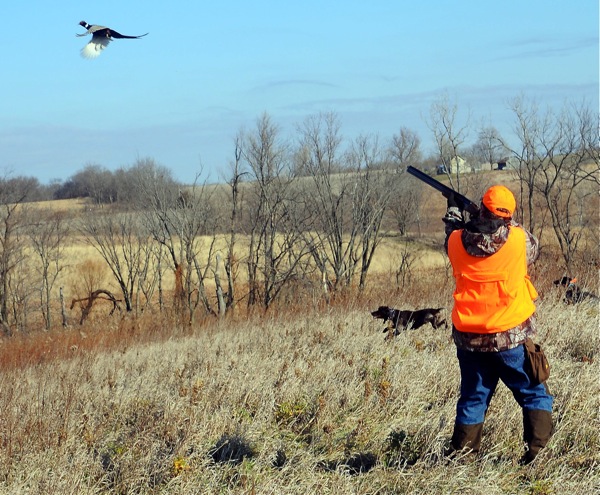
Iowa, Minnesota, and the Dakotas have plenty of public hunting grounds…and far more birds than hunters.
But first, the matter of where to find birds this fall. Driving across what twenty years ago was considered the pheasant belt of Iowa I was pleasantly surprised by landowners and game management people in August who shared that better days of pheasant hunting are beginning to come back. This, after a devastating two-decade long stripping of CRP ground to chase the lure of increased corn production for ethanol fuel. Many landowners soon discovered that it’s more expensive to farm than to earn by letting nature take its course through CRP (Conservation Reserve Program).
In addition, you find people in Iowa and Minnesota to the north that have a soft spot for the environment and the creatures thereof so much a part of local tradition – tradition you won’t find in Ohio because of contemporary culture and the attitudes that come with it. Ask five farmers if they’re willing to leave a strip of standing corn for wildlife, and I guarantee someone will tell you they never made a dime off a rabbit or pheasant.
But you can find vast sections of public land in Iowa, Minnesota, the Dakotas and Montana that welcome hunters to park, register, and hunt to your heart’s content…for free! In Iowa alone there are nearly a half million acres called WMAs (Wildlife Management Areas) managed by the state. All you have to do is register at the check-in boxes (name and address), have a valid hunting state hunting license, and you can hunt.
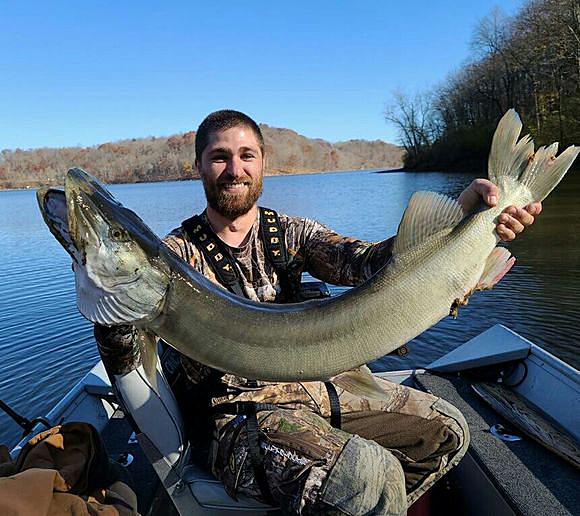 And wildlife management authorities that I spoke with in August shared that nesting conditions in the spring and early summer were generally good, providing higher anticipated pheasant numbers come October, November, and December.
In fact, I found similar reports every place I checked all the way to eastern Montana – mild dry springs and ideal nesting conditions for hens to hatch and raise their broods.
In my home stomping grounds of eastern Ohio I always get the question of how many other people are already there hunting?
The answer is some, but not near as many as you would’ve found in the 60s and 70s, the previous generation of people who grew up midst the peak of American hunting tradition.
But now that tradition has decreased by as much as 50% since the turn of the 21st century. Modern culture is turned off by hunting. Private posted lands have made it tougher. And the cost of hiring a outfitting service is not only prohibitive, but discouraging. Only the richest of the rich can now afford to hunt Alaska for multiple species of big game, despite healthy populations of elk, moose, bear, and sheep. Pick any two and you may spend as much as $100 thousand dollars when you’re all in and done.
Last year I personally found that if you’re willing to walk farther into the state-managed lands you’ll find birds. Most hunting pressure, in fact, comes from those who walk less than ten acres, get their birds, and leave. And it’s always been that way, even on private ground.
 I hunted just one section of the nearly five million acres of public land in South Dakota and had one of the best hunts of my life – pheasant and sharptail grouse. But I walked farther in than those looking for easy birds – probably ten miles for the day. And I found birds.
The last time I asked him Sonny said that December is still the only reasonable option for him to have time away, and I know what that means.
But having met people now who showed me proof of more reasonable options, I can assure that there are millions of acres of ground…if you want to go.
And I’ve also found that eating breakfast at the local diner in a small Dakota town will often get you on private land. The trick? Be courteous to ask around, and be prepared to prove who you are and that you have the same values as the landowner. If you want to go, try and see if I’m not right.
‘Til next time, I’ve enjoyed it.

Olde English Outfitters proudly sponsors coverage of the outdoors on Press Pros Magazine.com.