

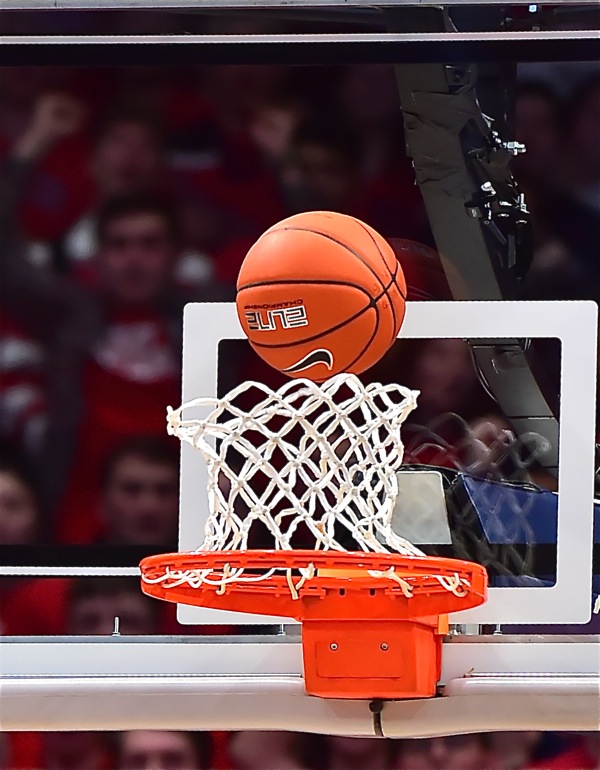
One look at Sunday’s tournament brackets is all it takes to understand that it doesn’t take until March 22 to determine a state champion in basketball. And for those school districts who have less than six wins, and tough economic times, are we sending the right message?
 I didn’t bother to look at Sunday’s OHSAA basketball brackets for the boys state tournament.
Didn’t need to.

Minster Dental is proud to sponsor the best in area sports stories on Press Pros Magazine.com.
The tournament, of course, is an exercise in determining a state champion by having the best teams compete with each other. Hence, the practice of ‘seeding’, where you determine, pre-tournament, the best teams as determined by their record during the season, then put together a schedule pitting the ‘best’ against the ‘rest’, with seeding rewarding the teams with the best records.
There have always been questions pertaining to the practice of ‘seeding’. And some rightly claim that #4 seed can beat a #1, so it’s not fair to call a #4 ‘the rest’, inferring that the #1 is four times better. But that’s how it’s done. They have #16 seeds, too. And there’s no question about their ability to compete.
And those of you who believe that the tournament is for everyone are welcome to explain to me how in a day of equal opportunity the likelihood of a #16 surviving the first round of the tournament is justified.
But there’s also an irony with basketball. We’ve always had fewer teams in the football playoffs than basketball. The ‘suits’ have always maintained that the playoffs are something you earn. That’s being questioned now, with 16 teams in a region. But still, you have to win a requisite number of games to make the playoffs, compared to the practice in basketball. If you come up short, you come back next year and try again? Prove that you’re better? A valuable life lesson?

But where’s that lesson with basketball? The same people who wanted football to be an earned experience somehow allowed for an open border policy with basketball. The blowouts in the first round are too numerous to count, and people shake their heads when a #16 seed stands and holds the ball for four quarters against a #1…to keep the score down.
The impending shot clock in high school basketball (it’s coming) will take care of that.
The point of the column is this. The high school basketball tournament is wasteful, out of step with competitive reality – that some school districts could probably spend their time and resources better than to say they participated in the state tournament.
And don’t forget. That we’re doing it for the kids – the excitement of being beaten 68-8 in the sectional/district round. Or, are we?

Mark Knupp’s Muffler and Tire proudly sponsor area sports on Press Pros Magazine.com.
It’s not popular to write, or to discuss with anyone in administrative capacity. But it is the truth when you ask the question with realistic perspective. Is it about determining a champion…or is it a token experience? A concession to tradition, or the modern mindset that everyone deserves a trophy?
If it’s about determining a deserving champion the tournament process could be made more efficient, more exciting, and more memorable. And to qualify for tournament bracket, you must win at least a quarter of your regular season games. Do that and the tournament can be concluded by the first week in March, instead of the final week in March.
The games would be competitive and exciting – actually worth paying more to watch than what you pay for the regular season.
Athletes who play spring sports would be afforded a rest period between seasons.
Still, there’s the cultural argument that it’s all about the kids. But is it? Consider that I recently asked some local high school players if they were excited about playing in the tournament.
“There’s other things I’d rather do,” one answered.

Publisher Sonny Fulks writes OHSAA and Ohio State sports for Press Pros Magazine.com.
Of course, there’s a financial reality. More teams, more games, more venues, more travel means more tickets sold and the oft-heard public cynicism that it’s about the money. Someone’s making money, even to park your car.
And God bless ’em. No one at Roselea Place is denying that.
But does it have to be?
Champions are great, and championships last forever. I’m all for it. But there is a reality.
Is there a reason to spin your wheels when upstream is just too steep a swim?
Why do we allow 68 to 8? How do you justify? I’ve seen it.
Why do we pretend that we’re doing that for kids?
When kids know better.

Athletes In Action is proud to be a presenting sponsor of area basketball on Press Pros Magazine.com. Call now for camp opportunities for your team in summer, 2026.