

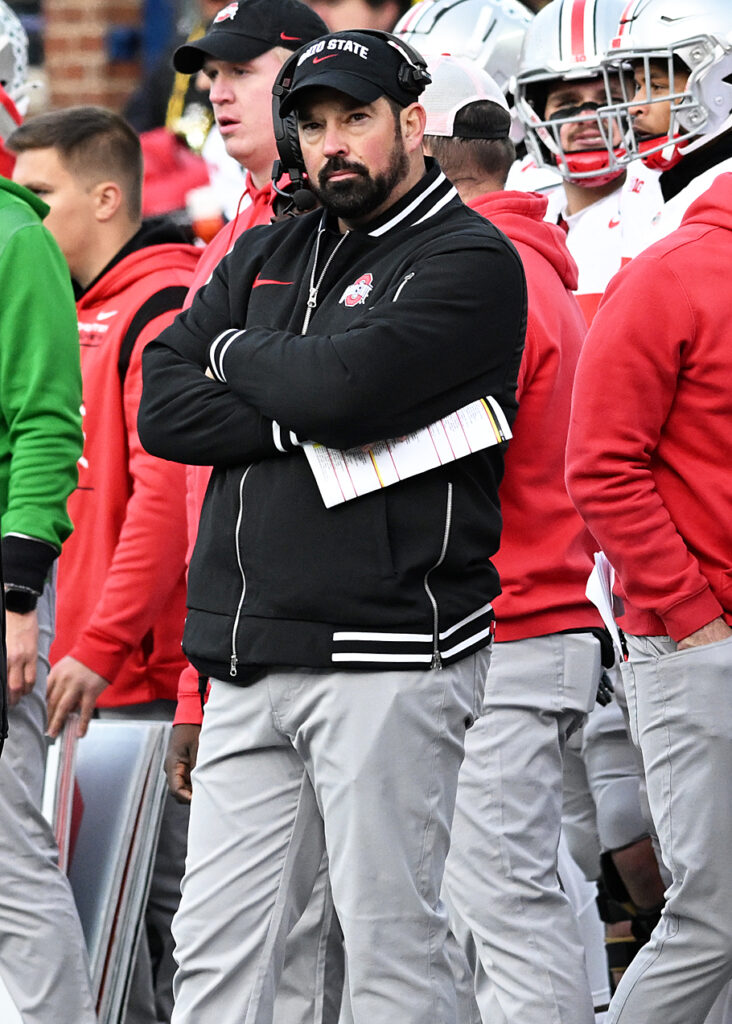
“There’s not a game that’s gone by I was not involved with every single call and listening to every call and making sure it’s what we’ve agreed upon going in. So it’s similar to the way it was before. So it won’t just be me, it will be everybody involved with it. And we need everybody to be on their game.” – Ryan Day
 Columbus, OH — Ryan Day is going to call the plays for Ohio State in the Cotton Bowl.
That was the biggest piece of news to come out Monday during the first round of interviews for the Buckeyes’ College Football Playoff quarterfinal matchup with the Miami Hurricanes.

Knapke Kitchens and Baths proudly sponsors Ohio State sports on Press Pros Magazine.com.
If you are the type who just likes to tune in and watch the game, to root for the Scarlet and Gray, eat some good food, revel with friends and see what happens, perhaps that isn’t a major concern of yours.
Veteran columnist Marcus Hartman writes the OHSAA, Ohio State, and sports at large for Press Pros Magazine.com.
If you are like most other people who read about sports on the Internet, you’re probably wondering just what that means for Ohio State’s chances of repeating as national champions.
The short answer: It might not make much difference.
The longer answer: It can’t hurt.
The longest answer: It is probably for the best.
If that is confusing, here is how those answers all tie together: Day was going to have a heavy influence on the offensive game plan against the Hurricanes no matter what, and he is the best man for the job.
“I’m involved with most of what goes on anyways, so we’ll be good,” he said. “We have good guys. It will be a group effort, but I think players will tell you we’re all involved with it anyways.”
The offensive game plan being a collaborative effort is a tale as old as time. We’re not privy to everyone’s individual responsibilities, but they work together to figure out what they want to do against various looks from the defense, on certain down and distance, in the red zone, in the two-minute drill and so on.
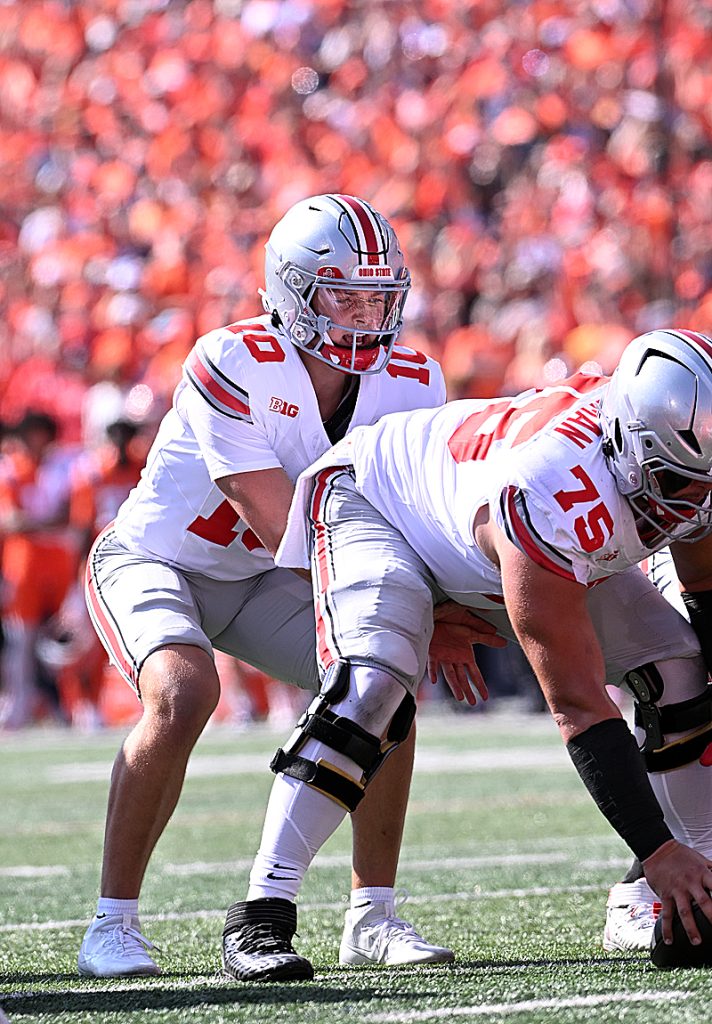
“When you’re at your best, the players already know what the call is before it even happens. So we’ll make sure we’re organized and make sure it’s really, really efficient.” – Ryan Day
By the time game day rolls around, whether Day, offensive coordinator Brian Hartline or someone else is actually saying the play into the headset for the quarterback is almost secondary because the staff already determined collectively what would be the best plan of action for any scenario they could imagine.
“A lot of the decisions have been made before it even happens, and I think that’s part of play calling, is making sure you’re organized so when you get into situation, we already know what the call is,” Day said. “When you’re at your best, the players already know what the call is before it even happens. So we’ll make sure we’re organized and make sure it’s really, really efficient.”
The biggest caveat here is how it might impact Day’s ability to manage the game.

Lefeld Welding Supplies proudly sponsors high school sports and the Ohio State Buckeyes on Press Pros Magazine.com.
The sidelines are a busy place during a college football game, and the head coach splitting his attention between calling the plays and deciding when to go for it, when to call timeout or what penalties to accept or decline can have a negative impact on both.
“I think it’s more just about when you’re not calling (the offense), your eyes aren’t down on the call sheet,” Day said. “Your eyes are up. You’re with the defense. You’re watching the offense. You’re watching the other side. You’re watching what’s going on as opposed to being down on your call sheet.”
That is why Day wanted to divest himself from calling plays in the first place, something he managed to do last year when Chip Kelly came in as offensive coordinator.
But the head coach revealed midway through the four-game playoff last January he had become much more involved in the offensive game-planning since the end of the regular season.
Putting time-consuming tasks, such as recruiting and transfer portal management in the rear-view, allowed him more time to do that, and he seemed to be glad for the opportunity to get back to ball.
His saying so during a press conference was like a lightning bolt from the sky at the time because it made the respective offensive explosions against Tennessee and Oregon in the first round and quarterfinal of the 2024 playoff come under a different light.
Day is a passing coach, a guru of the throw game, so Ohio State suddenly remembering it is wise to throw the ball down the field to future first-round draft picks in the NFL made even more sense in hindsight.
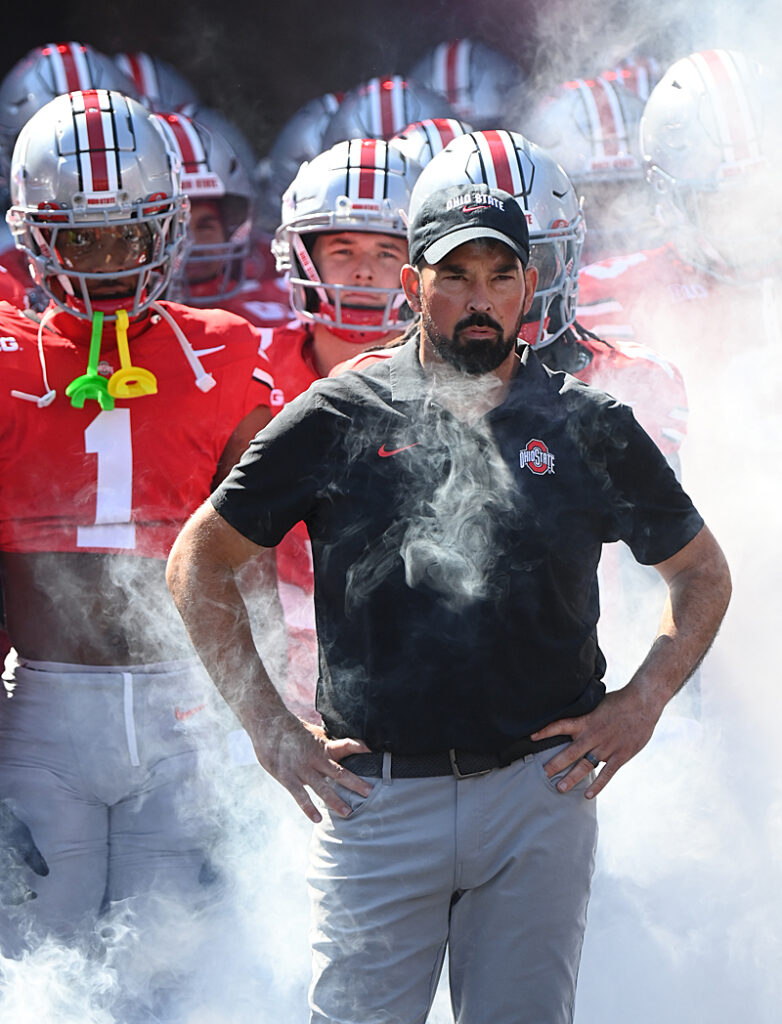
“I’m involved with most of what goes on anyways, so we’ll be good. We have good guys. It will be a group effort, but I think players will tell you we’re all involved with it anyways.”
Knowing that, a similar switch was not hard to see coming again this winter even if Hartline wasn’t dividing his attention between Columbus and Tampa, Fla., where he will be head coach at South Florida in 2026.
In fact, Day presiding over offensive game planning makes even more sense this year since: A.) It worked last year, B.) Hartline is a first-time play-caller, not the veteran Kelly is, and C.) The Buckeyes are coming off by far their worst offensive output since the opener against Texas.
“Today is a big practice for us as we move forward, and it’s our job to put the guys in the best position to be successful,” Day said of an offensive braintrust that includes Hartline, tight ends coach Keenan Bailey, offensive line coach Tyler Bowen, running backs coach Carlos Locklyn and quarterbacks coach Billy Fessler. “A big part of it is the organization and making sure the game plan is right and what we’re doing, and then the play calling, we’ll organize and make sure it’s efficient.”
Ohio State was most likely going to need to open up the passing game much the same way it did last season, so this move seems natural.

EB Real Estate, Darke County’s sales leader, proudly sponsors the best area sports on Press Pros Magazine.
It’s hard not to think Day is giving himself a new exam for which he already has the answers, but as always it will come down to execution.
That goes both for the coaching staff and the players.
Airing it out is much easier when you have All-American Jeremiah Smith and Carnell Tate at full speed and your redshirt freshman QB Julian Sayin has another game against a tough opponent under his belt.
Of course calling plays is never easier than when the offensive line is making its blocks, but that is a whole separate variable for this team.
 “There’s not a game that’s gone by I was not involved with every single call and listening to every call and making sure it’s what we’ve agreed upon going in,” Day said. “So it’s similar to the way it was before. So it won’t just be me, it will be everybody involved with it. And we need everybody to be on their game.”
How it works out is anyone’s guess.
Miami has a formidable defense with speed and talent at all three levels.
As Day (and this writer) noted in the aftermath of the loss to Indiana — when a handful of close plays could have gone either way but did not fall in favor of Ohio State — this is a make-or-miss world. If the plays works, it was a good call. If not? Well, what was that coach thinking?
Day will be the recipient of that feedback either way by the time the ball drops on New Year’s Eve.

The Arbogast family of dealerships proudly sponsors coverage of Ohio State football on Press Pros Magazine.com.